Introduction
In today’s digital business environment, organizations rely on advanced enterprise resource planning (ERP) systems to manage procurement, inventory, vendor relationships, and supply chain operations efficiently. One of the most widely used ERP solutions is SAP, and within SAP, the Material Management (MM) module plays a critical role in streamlining procurement and inventory processes.
As businesses continue to adopt SAP solutions worldwide, the demand for skilled SAP MM professionals is growing rapidly. Enrolling in an SAP MM Course can open doors to exciting career opportunities in procurement, supply chain management, inventory control, and ERP consulting.
In this article, we will explore how an SAP MM course can help you build a successful career and why it remains one of the most sought-after SAP modules in the industry.
What is SAP MM?
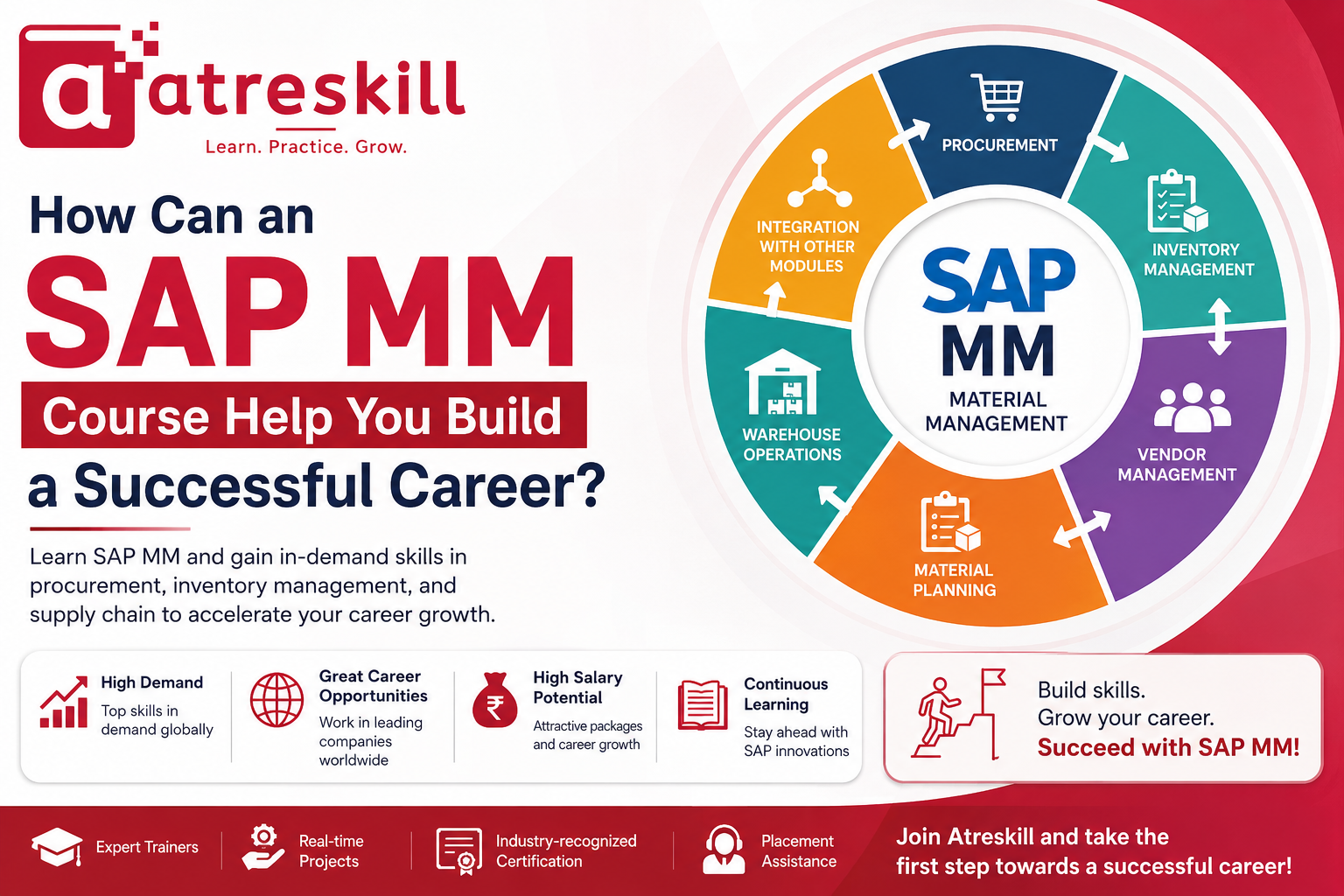
SAP Material Management (SAP MM) is a core functional module in SAP ERP that manages procurement, inventory management, material planning, vendor evaluation, and warehouse operations.
The module integrates with various SAP components such as:
- SAP SD (Sales and Distribution)
- SAP PP (Production Planning)
- SAP WM (Warehouse Management)
- SAP FICO (Financial Accounting and Controlling)
- SAP QM (Quality Management)
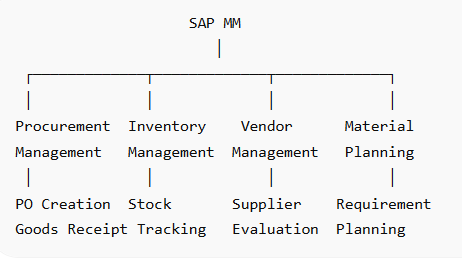
SAP MM helps organizations optimize material procurement, maintain accurate inventory records, reduce operational costs, and improve supply chain visibility.
Why is SAP MM Important for Businesses?
Efficient material management directly impacts a company’s profitability and operational efficiency. SAP MM provides businesses with tools to manage procurement cycles effectively while ensuring materials are available when needed.
Key business benefits include:
- Automated procurement processes
- Real-time inventory tracking
- Vendor management and evaluation
- Cost optimization
- Improved supply chain visibility
- Better compliance and audit control
- Reduced stock shortages and excess inventory
Because of these advantages, organizations across manufacturing, retail, pharmaceuticals, automotive, logistics, and IT industries actively seek SAP MM professionals.
What Will You Learn in an SAP MM Course?
A professional SAP MM course covers both theoretical concepts and practical business scenarios.
Core SAP MM Topics
1. Enterprise Structure
Learn how organizational units are configured, including:
- Client
- Company Code
- Plant
- Storage Location
- Purchasing Organization
- Purchasing Group
2. Master Data Management
Understand critical master data components:
- Material Master
- Vendor Master
- Purchasing Info Records
- Source Lists
- Quota Arrangements
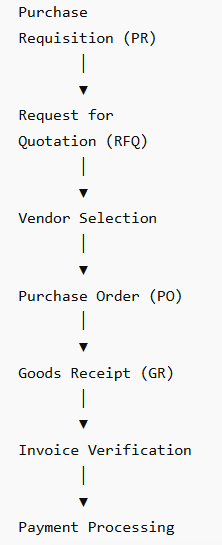
3. Procurement Process
Learn end-to-end procurement lifecycle:
- Purchase Requisition (PR)
- Request for Quotation (RFQ)
- Vendor Selection
- Purchase Order (PO)
- Goods Receipt (GR)
- Invoice Verification
4. Inventory Management
Gain expertise in:
- Goods Movement
- Stock Transfers
- Physical Inventory
- Batch Management
- Material Valuation
5. Pricing and Vendor Management
- Condition Techniques
- Pricing Procedures
- Vendor Evaluation
- Contract Management
- Scheduling Agreements
6. SAP S/4HANA MM
Modern SAP MM training also includes:
- SAP Fiori Applications
- Business Partner Concept
- Advanced Procurement Features
- Embedded Analytics
- Real-Time Reporting
Technical Skills You Gain Through SAP MM Training
An SAP MM course equips learners with valuable technical and functional skills.
Configuration Skills
You learn SAP MM customization activities such as:
- Defining document types
- Configuring release procedures
- Creating pricing schemas
- Managing account determination
- Configuring material types
Business Process Understanding
Students gain knowledge of:
- Procurement cycles
- Inventory control systems
- Supply chain operations
- Warehouse management
- Vendor collaboration
SAP Integration Knowledge
You understand how SAP MM interacts with:
- Finance
- Production
- Sales
- Quality Management
- Logistics Execution
This integration knowledge significantly increases your value as an SAP Course professional.
Career Opportunities After Completing an SAP MM Course
One of the biggest advantages of SAP MM certification and training is the wide range of career opportunities available.
SAP MM Consultant
Responsibilities:
- Configure SAP MM module
- Gather business requirements
- Implement procurement solutions
- Support end-users
SAP Functional Consultant
Responsibilities:
- Business process analysis
- SAP customization
- User training
- System testing
Procurement Analyst
Responsibilities:
- Purchase planning
- Vendor management
- Cost analysis
- Procurement optimization
Inventory Management Specialist
Responsibilities:
- Stock monitoring
- Warehouse coordination
- Inventory accuracy
- Material tracking
SAP Support Consultant
Responsibilities:
- Resolve SAP issues
- User support
- System maintenance
- Process improvement
SAP S/4HANA Consultant
Responsibilities:
- SAP implementation projects
- Digital transformation initiatives
- Process automation
- Advanced procurement solutions
Industries Hiring SAP MM Professionals
SAP MM experts are required in almost every industry that handles procurement and inventory operations.
Major industries include:
- Manufacturing
- Retail
- E-commerce
- Pharmaceuticals
- Healthcare
- Automotive
- Logistics
- Oil & Gas
- FMCG
- Information Technology
Many multinational corporations rely on SAP ERP systems, creating a consistent demand for SAP MM professionals worldwide.
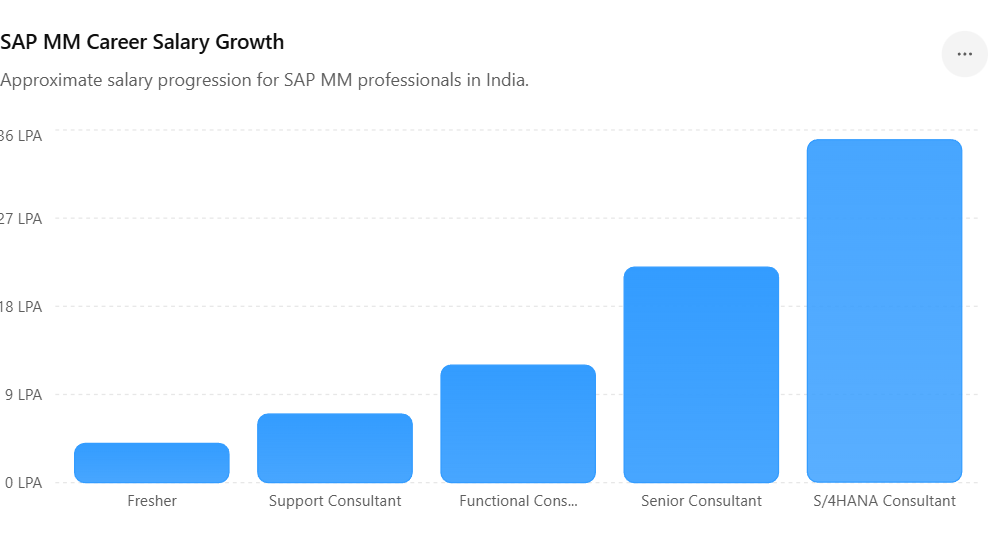
Salary Potential in SAP MM
SAP MM is considered one of the most rewarding career paths in ERP consulting.
Approximate salary ranges:
Freshers
- ₹3 LPA – ₹6 LPA
Experienced Professionals (2–5 Years)
- ₹6 LPA – ₹12 LPA
Senior SAP MM Consultants
- ₹12 LPA – ₹25+ LPA
SAP S/4HANA Consultants
- ₹15 LPA – ₹35+ LPA
Actual salary depends on experience, certifications, project exposure, and industry expertise.
Benefits of Learning SAP MM
High Demand
Organizations continuously seek professionals who can optimize procurement and inventory processes.
Global Career Opportunities
SAP is used in more than 180 countries, offering international career prospects.
Strong Job Security
Enterprise resource planning systems are mission-critical applications, making SAP professionals highly valuable.
Continuous Learning
SAP regularly introduces innovations through SAP S/4HANA, cloud solutions, and intelligent procurement technologies.
Career Growth
SAP MM professionals can progress into:
- SAP Solution Architect
- SAP Project Manager
- Supply Chain Consultant
- SAP Procurement Specialist
- SAP S/4HANA Lead Consultant
Why Choose SAP MM as a Career?
SAP MM combines business process expertise with technology skills, making it an ideal career choice for graduates and working professionals.
The module offers:
- Excellent earning potential
- Long-term career stability
- Opportunities across industries
- Global job prospects
- Continuous professional development
Whether you come from a commerce, engineering, logistics, supply chain, or management background, SAP MM Course in Noida provides a strong platform for building a successful and future-proof career.
Conclusion
An SAP MM course is much more than just software training—it is a pathway to becoming a procurement and SAP Supply Chain Management Course expert. By learning material management, procurement processes, inventory control, and SAP system configuration, professionals gain highly valuable skills that organizations actively seek.
With increasing SAP adoption and the transition to SAP S/4HANA, the demand for SAP MM consultants continues to rise. Investing in quality SAP MM training can help you secure better job opportunities, higher salaries, and long-term career growth in the competitive ERP industry.